Italiano
  English
 -
AMPHITHEATRE (early first century AC)
According to a commemorative stone found in the antiquarium, the amphiteatre was built by a member of the Gens Petronia....
-
AMPHITHEATRE monumental entrance
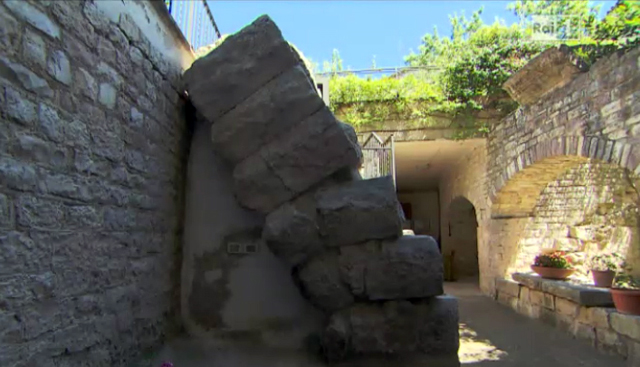
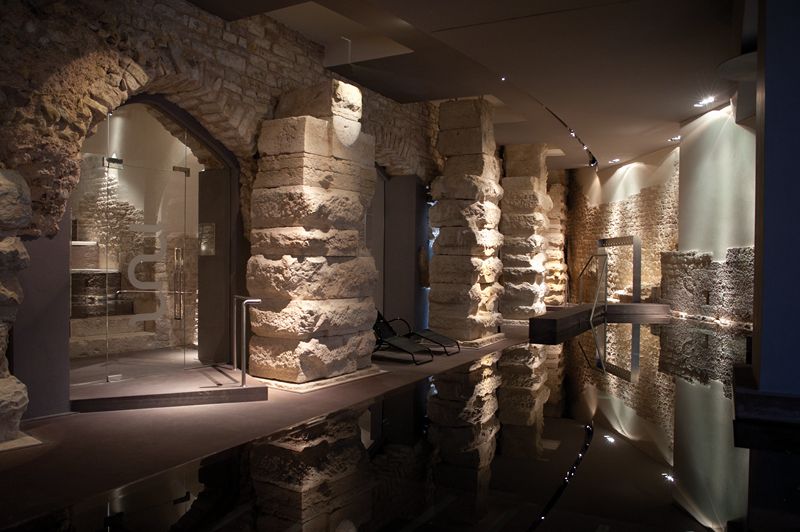
On the Southern side, in a private court yard, there are three impressive pillars on parallelepiped basements, which are situated...
-
MAUSOLEUM (I century AC)
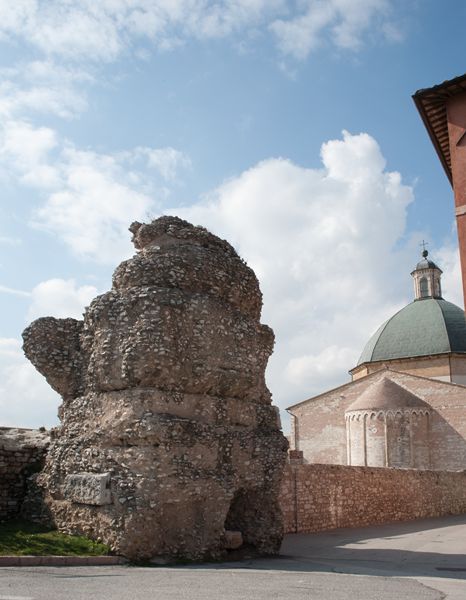
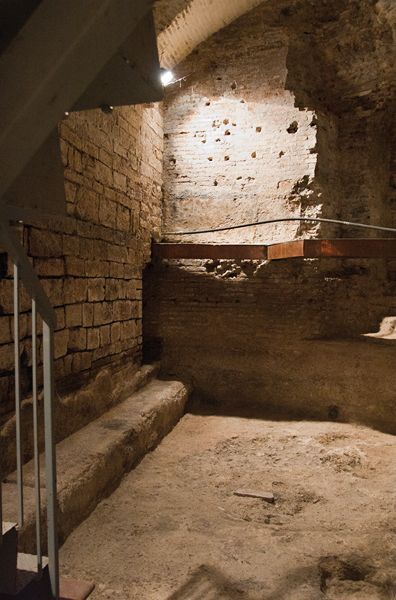
The Mausoleum is the most imposing funeral artifact. This kind of monument is repeated twice in our region: one example...
-
TEATRO OR CIRCO (I century BC)
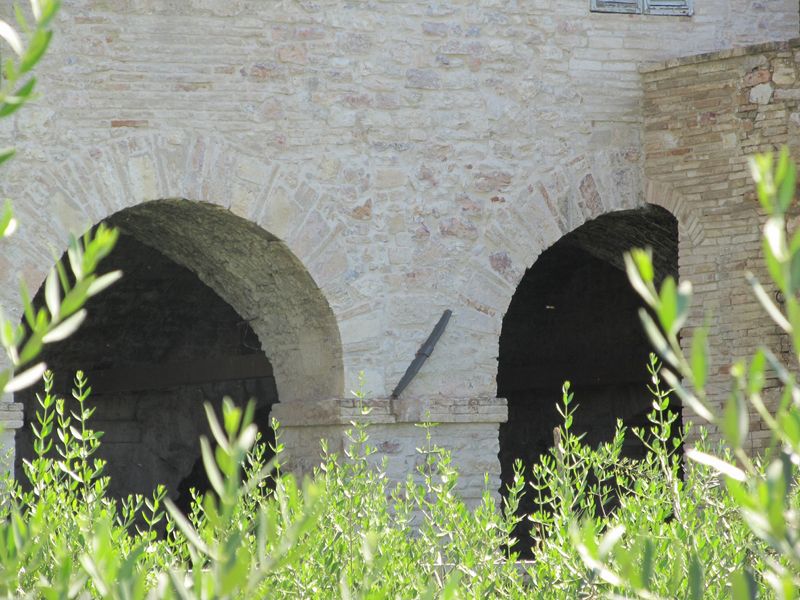
Five overlapping arches made of concrete and brick make us think of wedges of subterranean cells of a theatre, which...
-
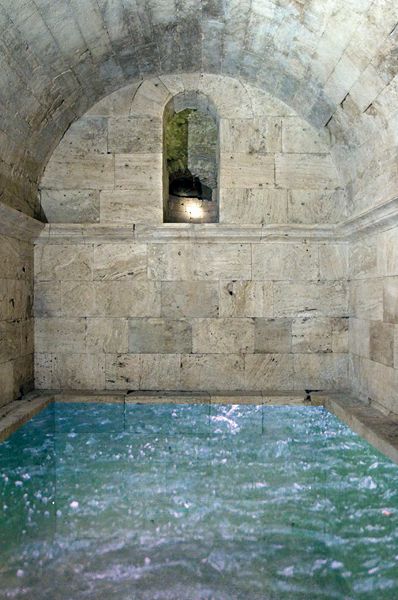
CISTERN OF ST. RUFINO (I century BC)
Inside the San Rufino cathedral it is possible to visit the cistern, which is perfectly preserved. The tub measures m...
-
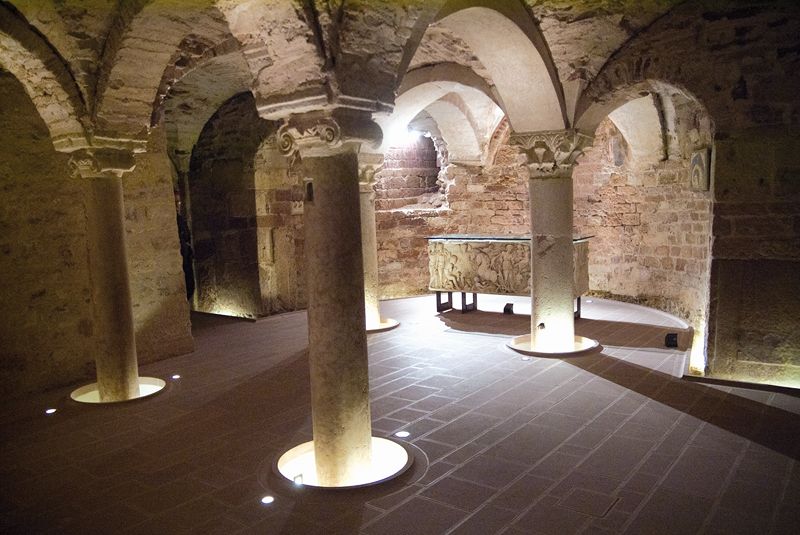
MUSEUM OF THE CATHEDRAL (II century BC)
RUINS OF A TERRACE OF THE ANCIENT FORUM (II century BC) In the crypt of the previous Basilica ugoniana and...
-
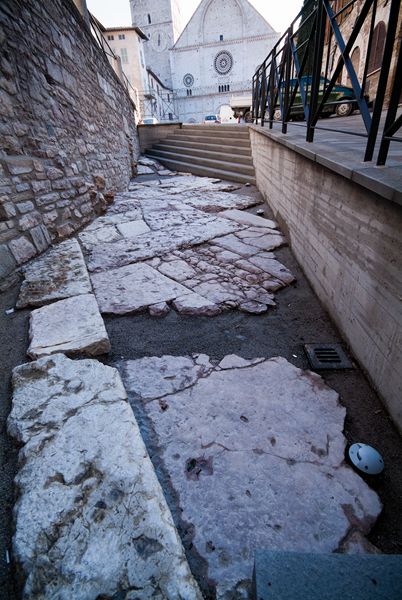
ROAD WITH BASALT PAVING (I century BC)
This main road, a wide surface of basalt composed of large limestone plates, with a step down on the side...
-
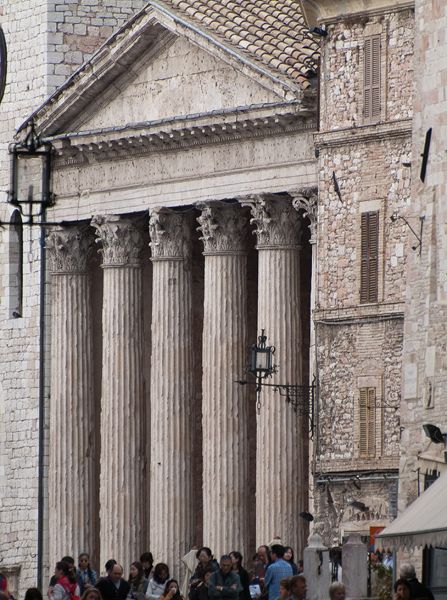
TEMPLE (Augustan Age, I century BC)
This is an Italic temple, intact, made of local travertine of Corinthian order, hexastyle, prostyle, dedicated to Goddess Minerva. Today...
-
FORUM – SANCTUARY (end of II century BC)
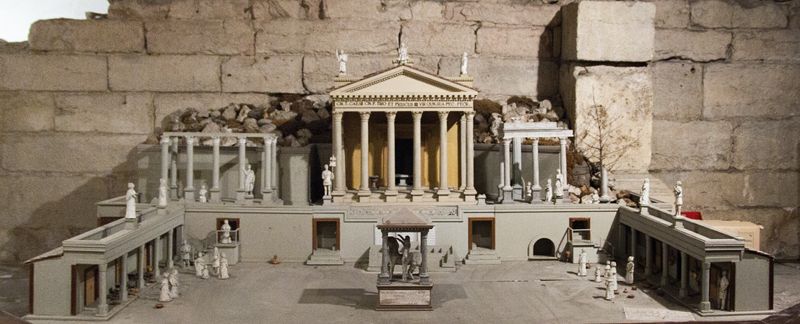
The temple led to the forum – the sanctuary of the city, now partly visible under the square (Piazza del...
-
SUBSTRACTION WALL OF THE CISTERN
Northwest wall with pink limestone ashlars and arches, 12 metres tall. It is part of the central terrace area pertinent...
-
WORKSHOPS OR TABERNAE AND DOMUS
Along the street Via San Gregorio, downhill on the left, there are significant remains of walls and pavement, connected to...
-
SOUTHERN CITY WALLS AND GATE (end of III century BC)
Still intact in this rather large area are significant remains of the city walls, measuring hundreds of meters. Although they...
-
THERMAL PLANT IN THE MONASTERY OF S. QUIRICO
Clearly visible inside the monastery of the Clarisse are some impressive ruins of public thermal baths. They consist of a...
-
THE SO CALLED DOMUS DI PROPERZIO (I century AC and following interventions)
The so called house of the poet Sesto Properzio, next to the southern city walls, was brought to light in...
-
ITER PRECARIUM
Located under the garden of the Church of St. Maria Maggiore is a postierla, which is a narrow passage in...
-
DOMUS DEL LARARIO (I sec. d.C.)
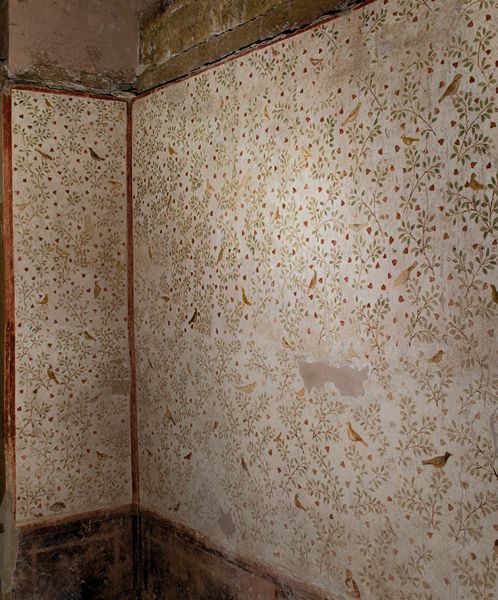
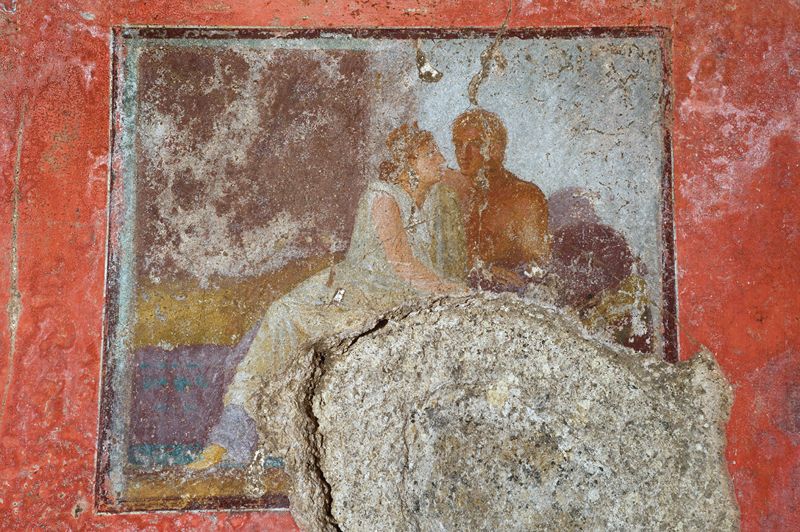
A Domus dating back to the Imperial age, 400 square meters, partly uncovered under the Palaces Giampè and del Cardinale....
-
TERRACED WALL, VIADUCT, WELL, FOUNDATIONS OF A BUILDING
A large part of a terraced wall, made of different sized pink limestone ashlars, corroded by time but still solid,...
-
SUBSTRACTION WALL (II century BC)
At the top of Piazzetta dell’Erba and above Via San Gabriele dell’Addolorata, there are some square metres of a wall...
-
LAIR OR VIA TECTA (I century AC)
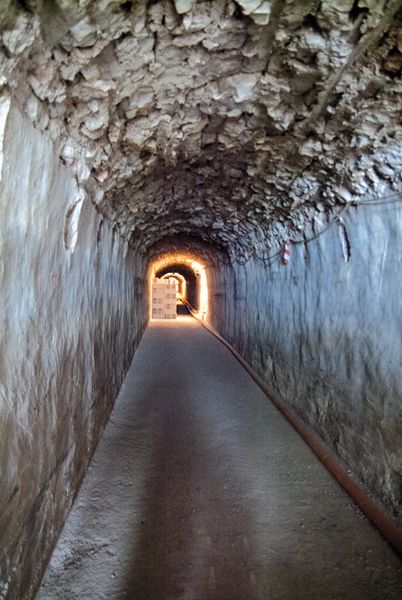
180 m long, 2,40 m tall and 1,80 m wide: it is made of small irregular pink limestone blocks fastened...

Route Roman Assisi
Categories: